July 15, 2024 · Brad Bichey · Payers, Denials & Prior Authorization
A Novel, AI-Based Method of Mitigating Prior Authorization Denials
This journey began following an unexpected encounter in the winter of 2021. At that time, I was leading a healthtech startup focused on enhancing communications between surgeons and patients. We had just begun to implement real-time analysis to deepen our understanding of the patient journeys facilitated through our platform. This was prior to the widespread release of technologies such as ChatGPT, Large Language Models (LLMs), and Artificial Intelligence (AI). At the time, I perceived AI as merely a novelty. However, that meeting profoundly altered the design of my sinus business and changed the way I fundamentally think about healthcare.
The Ethical Dilemma of AI in Healthcare
2021 was the start of my understanding of the early implications of artificial intelligence (AI) in our sector. I had a combination of fear and hope at the time. Would we see a new era of efficiency and innovation, or something else, more akin to the promise of EHRs that never materialized?
Today, it is evident that AI frameworks have become increasingly pervasive in the insurance industry. Unfortunately, as AI has been utilized by these large insurance corporations over the last five years, its application has triggered significant ethical concerns. Recent allegations suggest that some corporations have been using AI to deny patient claims, ostensibly putting profit ahead of patient care. This has led to a series of lawsuits. Anthem, United, and Cigna, have not delivered on their promise of better healthcare.
There Is a Lack of Transparency Across the Industry
There is no doubt that these AI systems have been in use for some time. A recent class-action lawsuit filed in Sacramento accuses Cigna of using an AI system, PxDx, to undercut costs by denying claims. In this instance, the lawsuit alleges that Cigna denied close to 300,000 claims with an average review time of 1.2 seconds.
“We literally click and submit,” one former Cigna doctor said. “It takes all of 10 seconds to do 50 at a time.” [1]
UnitedHealthcare is also facing accusations of using a flawed AI to deny Medicare claims, capitalizing on the low likelihood of appeals from senior patients. A recent lawsuit claims that UnitedHealth's use of the “nH Predict” algorithm violates contracts with patients and the insurance laws of numerous states. [2]
Because these systems in question were both powerful and hidden, by 2022, I began deconstructing the algorithms designed to evaluate and block surgical prior authorization documentation using a team of experts.
In Defense of the Insurance Industry
Despite the controversy, some defend the technology being used to deny claims. They cite studies where AI systems have matched or even exceeded human doctors in diagnostic accuracy. Studies from reputable sources like JAMA have shown AI's potential in improving diagnos
tic precision and patient interaction quality. [3]
As another example, Google’s own Med-PaLM2 has recently showcased remarkable capabilities, achieving over 85% accuracy on simulations styled after the US Medical Licensing Examination. [4]
AI-driven prior authorization determinations, claim to comprehensively assess patient health indicators with high accuracy. However, as surgeons we are well aware that accurate diagnosis is foundational to positive patient outcomes, and that direct human interaction is implicitly necessary.
Unethical AI Design Is Taking Advantage of Provider Burnout
Accuracy aside, the crux of the issue remains the misuse of AI by insurers, leveraging the technology to obstruct rather than enhance patient care. This misuse underscores a broader systemic problem within healthcare, where efficiency tools are repurposed for profit at the expense of patient access to necessary treatments.
AI discussions are not always popular in my meetings with surgeons. It is a problem exacerbated by overwork and a reluctance to embrace the rapid changes we are currently seeing in healthcare. Skepticism plays a key role in the slow adoption we are seeing. A recent Medscape Physician and AI Report surveyed over a thousand U.S. physicians about their views on AI. Across all surveyed, 65% had concerns about AI making diagnosis and treatment decisions, but 56% of respondents expressed enthusiasm about having AI as an assistant in their practice. [5]
Recently, Alfredo A. Sadun, MD, PhD, the Flora L. Thornton Endowed Chair at Doheny Eye Centers-UCLA and Vice-Chair of Ophthalmology at UCLA, commented on how burnout and other factors are also driving the slow adoption of AI solutions by physicians.
“There's still an abysmally poor understanding of AI among physicians in general. It's striking because these are intelligent, well-educated people. But we tend to draw conclusions based on what we're familiar with, and most doctors' experience with computers involves EHRs and administrative garbage. It's the reason they're burning out.” [6]
Legal Versus Ethical Practices in Surgery
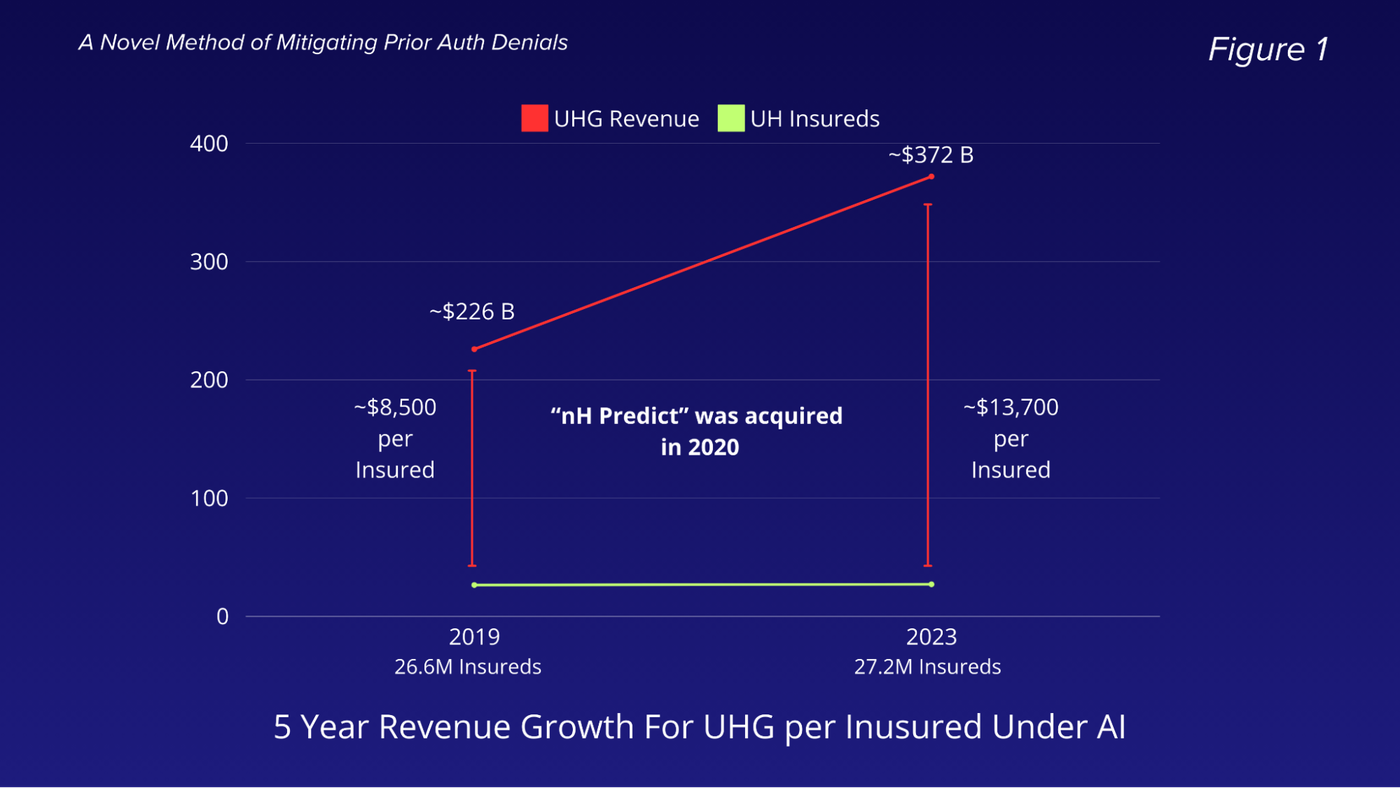
The hours of work we do to document care justifying a case can now depend on a 1.2 second software review. Figure 1 shows the massive increase in UnitedHealthcare Group’s (UHG) revenue per UnitedHealth (UH) insureds over a 5 year period ending in 2023. “nH Predict” algorithms were in use at or before 2020. Unfortunately, it’s clear that claim denial en masse has become a tactical move to place profitability over patient care in some instances. [7-11]
This behavior flies in contrast to the stated public mission of some of these companies. UnitedHealth Group's core mission statement can be found on their website. “Our mission is to help people live healthier lives. Our role is to help make healthcare work better for everyone. We seek to enhance the performance of the health system and improve the overall health and well-being of the people we serve and their communities.” [12]
Whether or not such practices are legal, healthcare insurers dictating care is undoubtedly unethical. Currently, insurance companies are exploiting circumstances in which overburdened surgical teams are unable to produce documentation that meets obscure AI scoring criteria. It is a practice that blocks at least 13% of the care that should be covered. Findings brought to light when HHS inspected claim denials for Medicare Advantage plans in 2022. [13]
Designing AI Mitigation for Prior Auth Denials
In 2022, in response to what we were learning, we asked,
“Can we use ethical AI to create a solution that effectively helps all surgeons mitigate PA denials, increase first pass approvals, and decrease peer-to-peer events, to the benefit of surgeons, staff, and patients?”
Core Vision
In the current healthcare market, where human oversight is increasingly assisted by AI, it is time for surgeons to begin embracing AI not just as a tool but as a core component of their operational strategies.
For the prior authorization process, this AI-driven approach offers a dual benefit of enhanced likelihood of approval and increased patient access to care. Therefore, leading to more ethical outcomes.
Major Concepts
Transforming the challenges posed by insurance companies into opportunities to enhance surgical care necessitates a strategy that incorporates four key concepts.
- Increasing the Likelihood of Surgical Care: By adopting AI-driven systems to improve documentation submitted to insurance companies, we use algorithms to analyze patient data against a set of criteria that closely mirrors insurance prerequisites for approvals. By ensuring all necessary conditions and documentation are met before submission, these systems significantly increase the likelihood of approval for surgeries.
- Decreasing Administrative Burden on Clinical Staff: Administrative tasks related to prior authorizations are complex, notoriously time-consuming, and prone to errors and frustration. By implementing AI to handle these tasks we free up clinical staff to focus more on patient care rather than these administrative duties.
- Decreasing the Risk of Audit Repayments (Addressing the Template Problem): Audit repayments often occur when insurers detect discrepancies in billing and documentation for provided services. Templated documentation does not accurately reflect the individualized patient care delivered. To combat this, AI ensures that records are both accurate and comprehensive. By eliminating templates, AI reduces the risk of post-audit discrepancies and potential repayments.
- Ensuring 100% HIPAA Compliance: Compliance with HIPAA's privacy and security regulations is critical in all healthcare processes, especially those involving the extensive use of patient data with AI. Built-in compliance and monitoring becomes programmatic, anonymizing patient identifiers where necessary, ensuring that all patient information is handled in compliance with federal regulations.
Using these four concepts we effectively reverse-engineered the prior authorization process into a beneficial tool that supports surgical care delivery and increases patient access to surgical services.
The Sinus Procedure Blueprint
Figure 2 outlines the basic Agents, Systems, and Processes used in creating surgical prior authorization documentation. To create documentation that mitigates denials through an upscoring process, several different types of AI are used in a process designed around humans-in-the-loop.
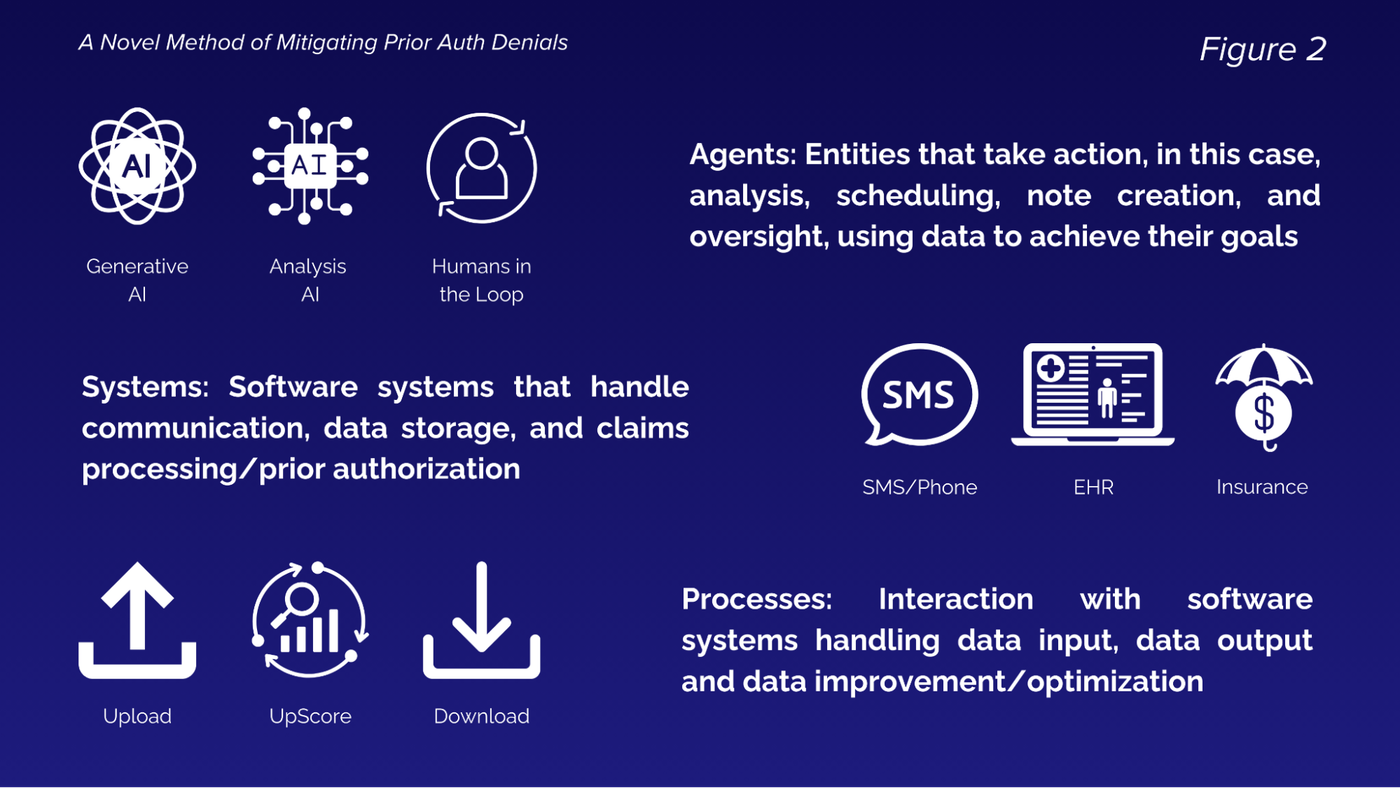
Figure 3 illustrates the process of upscored note creation using four major steps. These steps can be used for any blueprinted surgical procedure. The steps are as follows:
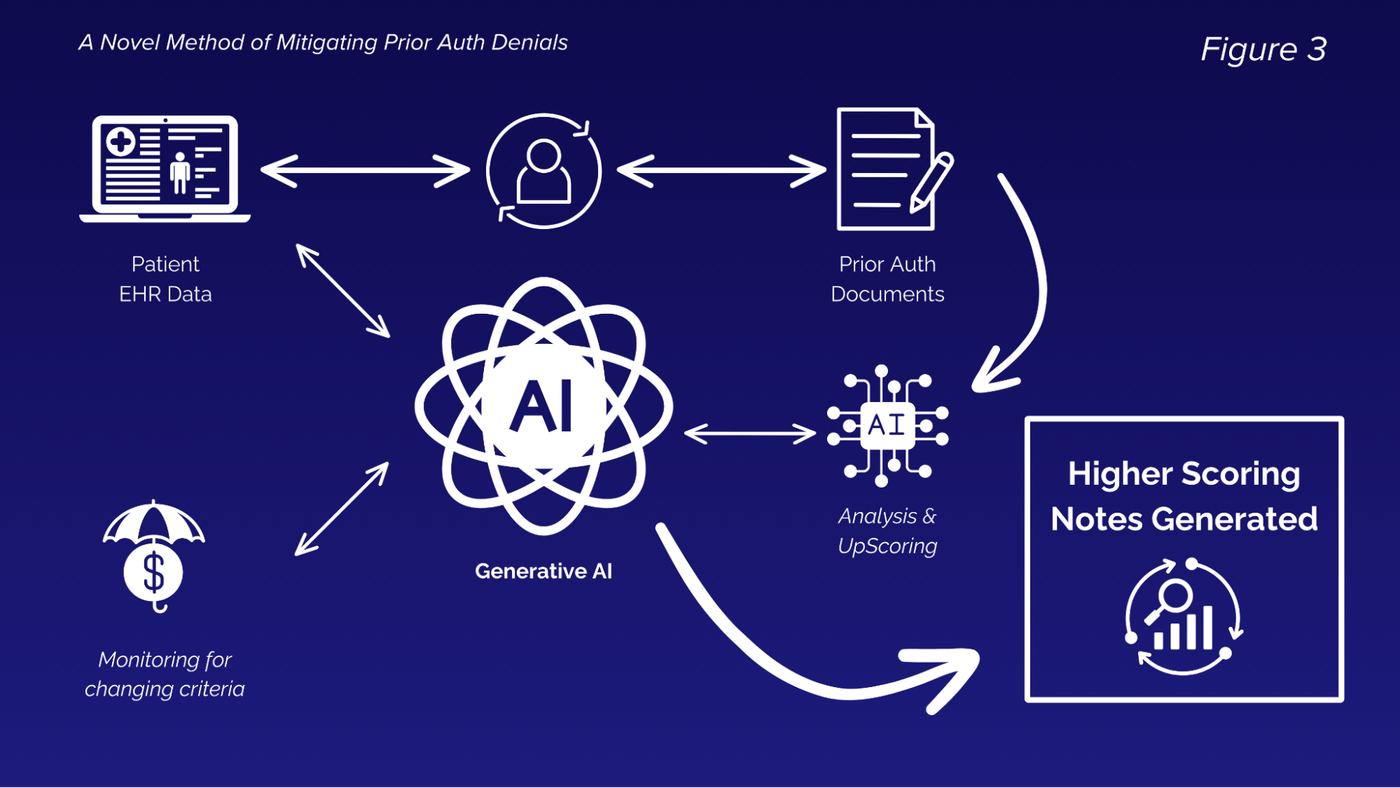
- Integrated Upload: This step ensures the effortless integration of patient data into the AI system. Our platform supports various data formats, allowing for quick uploads directly from healthcare providers' electronic health records (EHRs).
- ICD-10 Baselining: The AI framework employs analysis of International Classification of Diseases, Tenth Revision (ICD-10) codes. Predictive analytics are used to baseline diagnoses ensuring compliance with insurance requirements critical for reducing mismatches and discrepancies that could lead to claim denials.
- Deficiency Detection/Upscoring: The AI analyzes the uploaded documents, cross-referencing patient data against a comprehensive checklist based on insurer requirements. Upon detecting deficiencies, the AI suggests corrections and enhancements. Upscoring involves refining the documentation to better demonstrate medical necessity for the procedures requested.
- Note Creation/Quality Improvement: After adjustments, the generative AI creates an upscored medical note for download. This document is optimized for approval and addresses all previously identified gaps, better aligning with payer expectations. To ensure continuous improvement, the AI also conducts post-process analyses used to refine future algorithms.
By leveraging AI in these ways, this framework not only reduces the administrative burden on healthcare providers but also enhances the accuracy and efficiency of the prior authorization process.
Outcomes and Conclusions
To date, our framework has analyzed approximately 12,000 patient journeys. Approximately 20% have undergone note creation through the sinus procedure blueprint based on patient candidacy. Our peer-to-peer reviews have been remarkably low, occurring in fewer than one out of every 200 cases, and the rate of first-pass denials stands at an impressive 2% across the dataset.
Figure 4 illustrates the improvement achievable in ICD-10 scoring. Scoring is indicative of the probability that the patient has the specified diagnosis predicting 100’s of j-codes per patient.
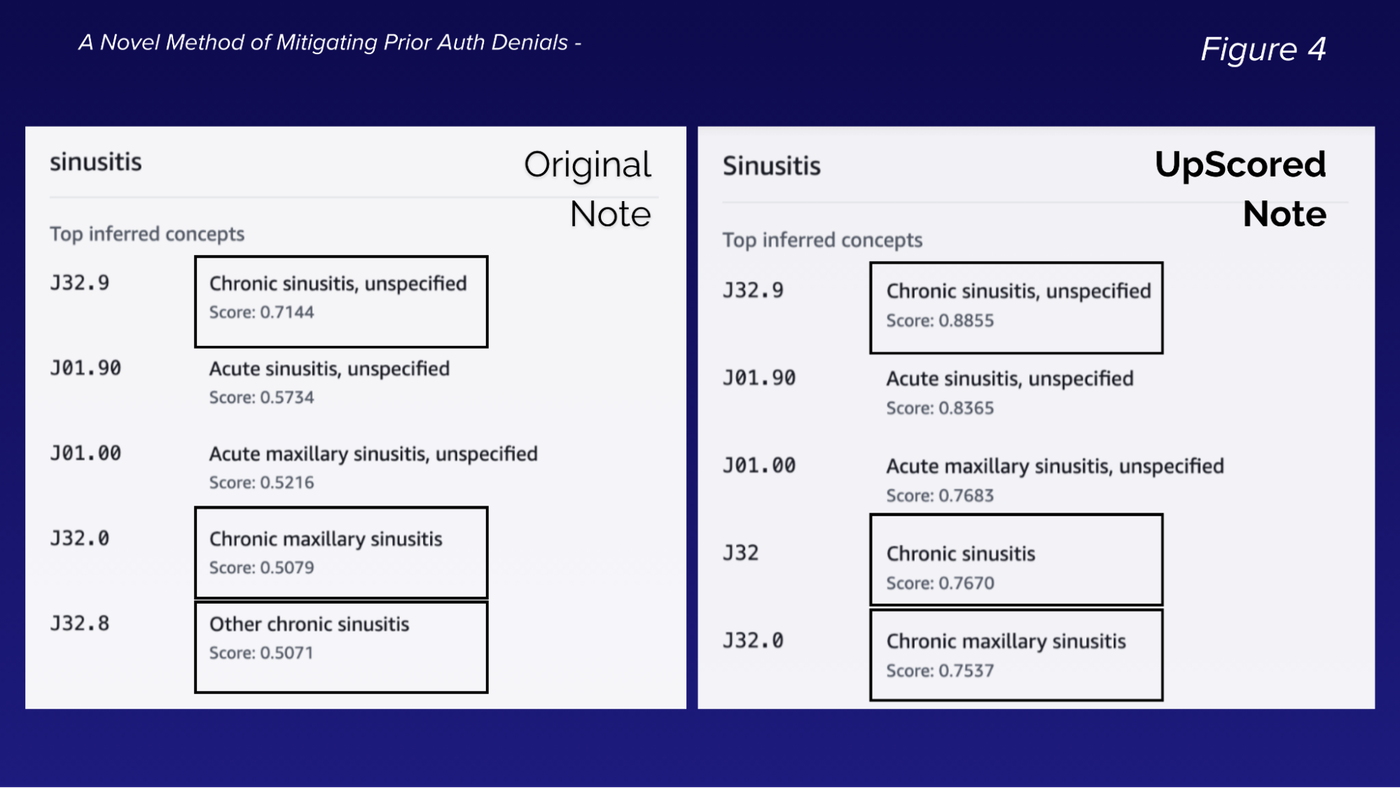
These outcomes indicate a substantial enhancement over existing models, even within this relatively limited dataset. We anticipate that further refinements and the development of additional surgical procedure blueprints will continue to drive improvements in these outcomes.
As healthcare professionals and industry leaders, we all must scrutinize the role of AI in healthcare. It is imperative to ensure that these tools are used to support, rather than undermine, patient care.
AI holds tremendous potential to transform healthcare, but its application must be guided by ethical standards that prioritize patient well-being. Now more than ever, surgeons and their stakeholders need to be involved in rethinking their strategic processes. I personally invite all healthcare professionals to join me by adopting AI solutions that are transparent, equitable, and patient-centered, ensuring technology serves as a bridge to better health outcomes, not a barrier.
References
- propublica.org — Cigna PxDx
- medicaleconomics.com — UnitedHealthcare AI denial lawsuit
- PubMed 38386351
- Google Med-PaLM
- Medscape Physician and AI Report
- Medscape — Are You Ready for AI to Be a Better Doctor Than You?
- UnitedHealth Group Q4 2018 results
- UnitedHealth Group Q4 2023 results
- WUSF — Feds rein in predictive software
- UnitedHealth Group Q4 2019 results
- UnitedHealth Group investor conference
- UnitedHealth Group mission and values
- HHS OIG — OEI-09-18-00260